50 founding spots open now

Your child has mail from 1926 Harlem.

Once a month, a sealed envelope arrives with your child's name on the front. Inside: a letter from Marcus or Cora, two children living through the Harlem Renaissance, writing to a friend they have never met. No app. No screen. No algorithm deciding what comes next.

Ages 7–13  •  One letter a month  •  Everyone starts at Letter 1
Subscribe by the 20th and it mails that month

UNITED
STATES
POSTAGE
2¢
HARLEM
N.Y.
SEP 14
1926
L
Delivered by hand to Amara c/o the front porch,
somewhere in America

This is exactly how it arrives. Addressed to them, not to you.

Four things no other children's subscription does at once.

It comes by mail

A sealed envelope your child opens themselves. Nothing to swipe away, nothing autoplaying next.

It's real history

Every letter is built on verified research into 1926 Harlem, from the Cotton Club marquee to the 135th Street library.

A child wrote it

Not a textbook and not a lesson. One eleven-year-old telling another what his week was like.

It says: you come from this

Built by Black founders for Black families, and open to every child who wants to walk through that door.

Two children. One building. Pick the one who fits yours.

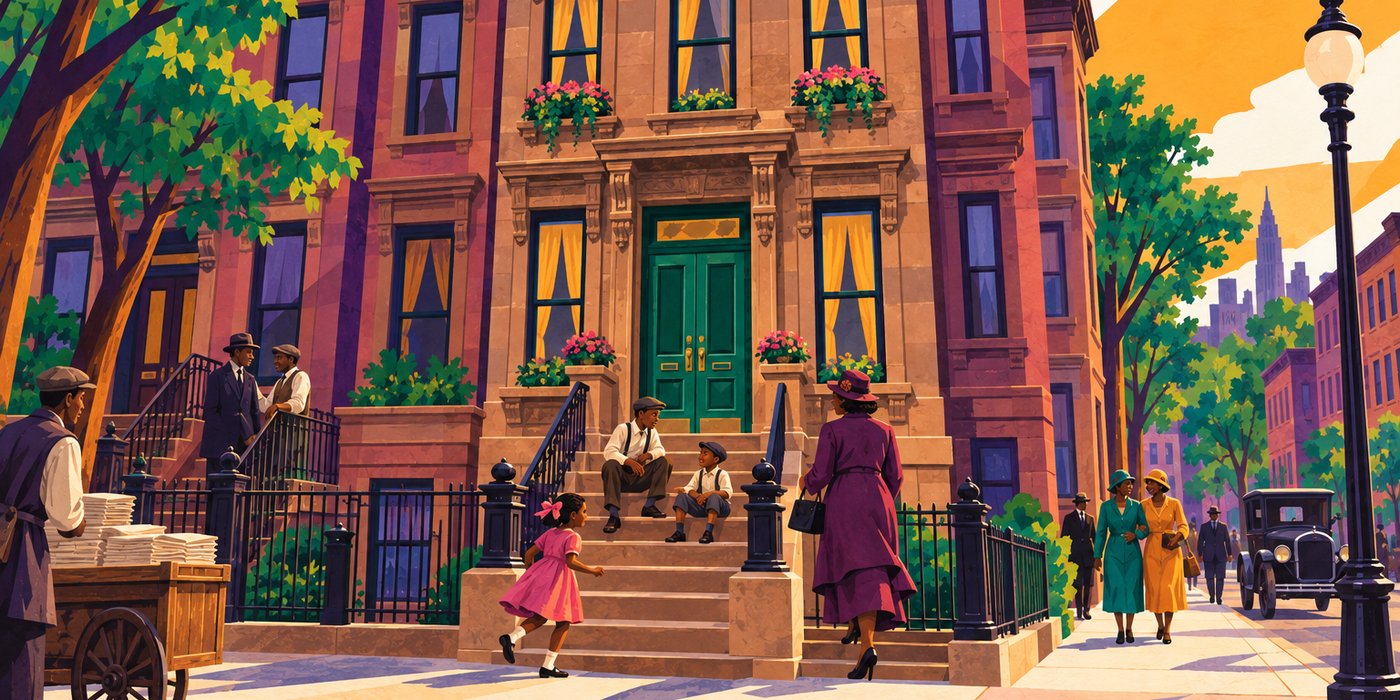
Marcus lives on the second floor. Cora lives one flight up on the third. They go to the same school and the same church, and they are writing from the same Harlem block in the same extraordinary year.

A Harlem street in 1926. Children sit on the stoop of a brownstone with a green door, a newspaper vendor works his cart at the corner, and neighbours pass on the sidewalk.
Their block. The green door is the one they both come home through.
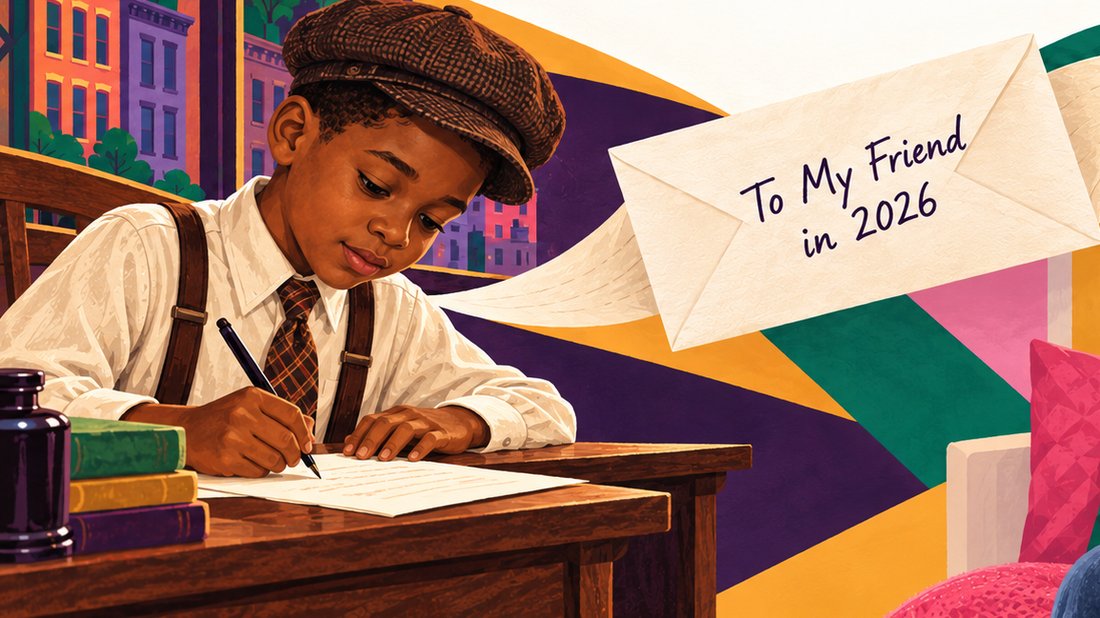
Marcus, a boy in a newsboy cap and suspenders, writing a letter at a wooden desk. An envelope drifts away from him reading, in handwriting, To My Friend in 2026.

Written for readers ages 7 to 9

Marcus James Washington

Age 11. Son of a Cotton Club trumpeter. Wants to fly planes, and does not consider this negotiable.

Daddy's name is on the marquee now. Not painted small at the bottom either. Big, up top, where you can read it from across the street. I stood there so long Raymond said I was going to grow roots.

— from Letter One, September 14, 1926

His people
Calvin, who leads the Harlem Five. Dorothy, who teaches first grade at P.S. 119. Ida, his grandmother, who holds the whole house up.
What comes in his envelope
A replica rent party ticket stub, a clipping from the Harlem Defender, a stickball scorecard from the block game.
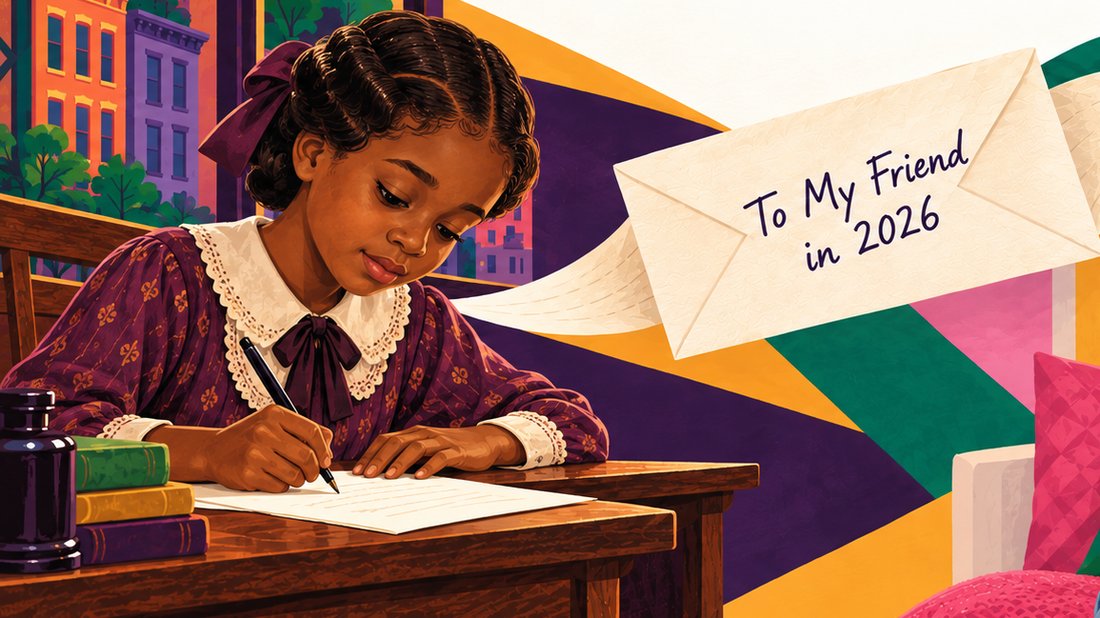
Cora, a girl in a high-collared purple dress with a ribbon in her hair, writing a letter at a wooden desk. An envelope drifts away from her reading, in handwriting, To My Friend in 2026.

Written for readers ages 10 to 13

Cora Elaine Beaumont

Age 10. Daughter of a Pullman porter. Writes four drafts before she finds her first sentence.

From the fire escape you can see the whole block at once. Mrs. Aiken sweeping. The boys arguing over a ball. I have been sitting here trying to write down the color the light goes at four o'clock and I still have not gotten it right.

— from Letter One, October 2, 1926

Her people
James, whose Pullman routes bring back a pressed penny or a ribbon they don't sell on 125th Street. Virginia, a seamstress whose hands hold the neighborhood together.
What comes in her envelope
A pressed flower, postmarked 1926 stamps, a sugar cube folded in wax paper.

What happens after you subscribe

  1. You choose

    Marcus for ages 7–9, Cora for ages 10–13. One character per subscription.

  2. The envelope arrives

    Posted on the last business day of every month, with the artifacts and the parent guide tucked in beside it. A single arrival your child learns to watch for.

  3. Your child opens it

    Their name is on the front. They break the seal themselves and read at their own pace.

  4. They find the artifacts

    Period pieces tucked inside to hold and keep. A ticket stub. A pressed flower. A stamp from 1926.

  5. You talk about it

    A parent guide comes with every mailing, with questions that turn the letter into a dinner table conversation.

Join any day of the year and you still start at Letter 1. There is no enrollment window and no catching up. Season One runs twelve months, twelve letters, one complete story.

Everything inside one month's envelope

Printed on natural parchment stock, sealed in a C5 envelope, sent USPS First Class.

The letter

Set in your child's chosen character's own handwriting and dated to the day it was written. 250–350 words from Marcus, 350–500 from Cora.

Period artifacts

Small objects from 1926 that make the world tangible. Children keep these. They bring them to school.

A parent guide

Written for you, not your child. Historical context, three or four questions worth asking, and where the letter is headed next.

Why this matters more than it might look

The instinct to find your child a mirror is not sentimental. Three decades of research back it up, and the numbers on the other side are hard to read.

84%

of Black fourth graders score below reading proficiency, against 61% of white fourth graders.

Annie E. Casey Foundation / NAEP, 2024
14%

of children's books feature Black characters, and being counted is not the same as being drawn with depth.

Cooperative Children's Book Center, 2022
6.8×

more often white authors and illustrators appear in school curricula than Black ones, across 300 ELA books studied.

The Education Trust, 2023
−23%

drop in Black character representation in children's bestsellers between 2020 and 2022.

WordsRated, 2022

Books function as mirrors, windows, and sliding glass doors. Children learn more, retain more, and read more when the stories they meet reflect their own identities, histories, and communities.

Dr. Rudine Sims Bishop, Professor Emerita, The Ohio State University, 1990.

Dr. Bishop explaining the framework in her own words. Video courtesy of Reading Rockets.

The mirror
A story that reflects the child back to herself. Bishop's argument was that a child who never finds herself in a book absorbs a quiet lesson about her own worth, and that a child who finds only flattened versions of herself absorbs a worse one. Marcus and Cora are the mirror: ordinary Black children with interior lives as full as your own child's.
The window
A view into a life that is not yours. 1926 Harlem is a real place your child has almost certainly never been shown from the inside, with its own rent parties, marquees, Pullman routes, and Sunday mornings. Bishop noticed that in the right light a window becomes a mirror, which is exactly what happens when a child recognizes her own grandmother in Ida Washington.
The sliding glass door
The part most people leave off. A door is what turns a reader from a spectator into a participant, and it only opens when the story invites her through. Our letters have her name handwritten on the envelope and are addressed to her directly. That is the door, and it is standing open.

What that means for the child at your kitchen table

Mirrors, not just windows

Educational research has long established that children need both mirrors, stories that reflect their own lives, and windows into lives different from their own. For African American children, mirrors in literature are not a luxury. They are a developmental necessity. When a child reads about a character who shares their heritage, their community, their family structure, and their history, the message received is profound: I exist in the story of this country. I have always existed.

Identity is built through story

Children form their sense of self between ages 7 and 13, precisely the years Letters From Another Time is designed to serve. During these years, what a child reads shapes what they believe is possible for someone like them. Stories of Black excellence, resilience, creativity, and joy during the Harlem Renaissance and across every era of American history do not simply teach history. They expand a child's imagination of who they can become. Identity rooted in dignity is identity that holds.

Confidence follows recognition

Studies on culturally relevant literature consistently show that African American children who encounter affirming, historically grounded stories demonstrate measurably higher reading engagement, stronger academic self-concept, and greater resilience in the face of challenge. When a child sees their ancestors not as footnotes but as protagonists, curious, brave, complicated, fully human, they internalize a truth that no standardized curriculum can give them: my people have always been extraordinary. That truth, absorbed young, becomes confidence that lasts a lifetime.

When a child receives a letter from someone who looks like them, thinks like them, and lived before them, they don't just learn history. They inherit it.

The vision behind Letters From Another Time

Choose a plan

Cancel any time. One character per subscription. All plans include the letters, the artifacts, and the parent guide.

Standard monthly

$14.99 / month
  • A letter every month
  • Period artifacts included
  • Parent discussion guide
  • Month to month, cancel any time
Choose monthly
50 spots only

Founding family

$10.99 / month, locked for life
  • Your rate never changes, ever
  • A letter every month
  • Period artifacts and parent guide
  • Named in the founding family archive
  • First look at every future season
Claim a founding spot

Annual

$149 / year
  • Works out to $12.42 a month
  • All twelve months of Season One
  • Paid once, nothing to renew mid-year
  • Makes a real gift for a grandchild
Choose annual

Every plan carries a 30-day satisfaction guarantee. Founding rate is honored for as long as the subscription stays active. When the standard rate rises, founding families never see the change.

History is waiting in the mailbox

Pick the child who will write to yours, pick a plan, and tell us where to send it. Payment is handled on Stripe's secure page. Subscribe by the 20th and your first envelope is posted at the end of this month; after that, it goes out with next month's mailing.

Step 1. Choose your character

One character per subscription. Choose by temperament if your child sits between the two ages.

Step 2. Choose your plan

Every plan includes one letter a month, the period artifacts, and the parent guide.

Step 3. Your information

We address the envelope to your child, so the spelling of their name matters to us. Stripe takes your mailing address on the next screen.

The next screen is Stripe's, where you'll enter your mailing address and payment details. Stripe never shares your card number with us. Your subscription starts once payment is confirmed, and you can cancel any time from your billing dashboard.

SSL encrypted checkout Payments powered by Stripe Cancel any time 30-day satisfaction guarantee

Letters From Another Time is a product of Sankofa Innovations LLC, Raleigh, North Carolina.

Why we're called Sankofa

Sankofa

An Akan word and symbol meaning go back and get it, drawn as a bird flying forward with its head turned back. That is the whole idea in one picture: learn from what came before in order to build what comes next.

Black children are not just the descendants of people who survived. They are the descendants of people who built, created, dreamed, and celebrated, even when the world told them not to.

Letters From Another Time was made by Antoine and Cynthia Medley in Raleigh, North Carolina, out of one conviction: that Black children deserve to meet American history as participants rather than observers. Not through a textbook. Through the voice of a peer who lived it.

Season One is the Harlem Renaissance. The eras after it are already mapped, each with new children and new voices, held to the same standard of research and care.

Antoine & Cynthia MedleyCo-creators, Letters From Another Time

Read the full letter from the founders

Questions parents ask

Which character should I choose for my child?

Marcus writes for ages 7 to 9. His letters run 250 to 350 words in an energetic, outward voice, good for a newer or more reluctant reader. Cora writes for ages 10 to 13, at 350 to 500 words, quieter and more literary. If your child sits between the two, choose by temperament rather than age.

How often does mail actually arrive, and when?

One letter a month, in a sealed envelope addressed to your child, with the period artifacts and the parent guide inside the same envelope.

Subscribe by the 20th and your letter is posted on the last business day of that same month. Subscribe after the 20th and you come in with the following month's mailing. Allow three to five days after posting for it to arrive. Every mailing date for Season One is here.

What if we join in the middle of the season?

You start at Letter 1. Every subscriber does, whatever month they join. Nobody arrives in the middle of a story.

Is there an app, a website login, or anything on a screen?

No, and that is on purpose. The entire experience is physical. The only email you'll get from us is the occasional note to you as the parent about billing or what's coming.

Can I cancel, and how?

Any time, from your billing dashboard. Manage your subscription here using the email address you subscribed with. You can cancel, update your card, or pull receipts without going through us.

Monthly plans stop at the end of the month you've already paid for. Annual plans run to the end of the twelve-month season. Founding families who cancel give up the locked founding rate, since that rate is tied to the subscription staying active.

What if it isn't right for my child?

Email us within 30 days of your first charge and we'll refund it in full, whichever plan you're on. Keep the letters and whatever came with them. We're not going to ask a child to mail back a pressed flower.

After 30 days, cancel any time from your billing dashboard and the terms above apply. Refunds go back to your original payment method and usually land within five to ten business days.

If an envelope arrives damaged or never arrives at all, that's on us. Tell us and the replacement goes out free. That isn't a refund and doesn't count against your 30 days.

Is this only for Black families?

It was built by Black founders for Black families, and that shapes every choice in it. It is also open to any family that wants their child reading it. For some children these letters are a mirror. For others they're a window. Both are worth having.

How long is a season, and what happens after?

Season One is twelve months and twelve letters, a complete narrative arc set in 1926 Harlem. Later seasons move to new eras with new children, and subscribers get first refusal on each one.

Where do you ship?

Anywhere in the United States, by USPS First Class, in a sealed C5 envelope addressed to your child by name.

Get the first letter's opening lines

Leave your email and we'll send you the opening of Letter One, plus word when founding spots run low.